Factory Supply Polycaprolactone CAS 24980-41-4 With Best Price - User Guide
Índice
Información básica y parámetros
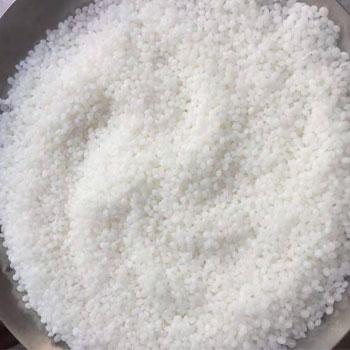
Polycaprolactone (PCL) with the CAS number 24980 - 41 - 4 is a biodegradable polyester. It has a low melting point, typically around 60°C, and a glass - transition temperature of about - 60°C. PCL is a semi - crystalline polymer, with a degree of crystallinity that can vary depending on its molecular weight and processing conditions. The polymer is soluble in a variety of common organic solvents such as chloroform, dichloromethane, and toluene. It has a relatively high molecular weight range, which can be adjusted during synthesis to meet different application requirements. PCL has excellent biocompatibility, which makes it highly suitable for biomedical applications.
Uses of Polycaprolactone
1. Biomedical field: In tissue engineering, PCL can be used to fabricate scaffolds. These scaffolds provide a three - dimensional structure for cells to grow and proliferate. Due to its biodegradability, it can gradually degrade in the body as the tissue regenerates. It is also used in drug delivery systems. Drugs can be encapsulated within PCL microspheres or nanoparticles, and the controlled release of the drug can be achieved through the degradation of PCL.
2. Packaging industry: PCL can be blended with other polymers to improve the flexibility and toughness of packaging materials. Its biodegradable nature also makes it an environmentally friendly option for packaging, reducing the environmental impact of traditional plastics.
3. 3D printing: PCL is a popular material in 3D printing. Its low melting point allows for easy extrusion during the printing process. It can be used to create complex and customized structures, which are useful in prototyping and in the production of consumer products.
How to Use Polycaprolactone
1. Preparation: Before using PCL, it should be dried to remove any moisture. This can be done by placing the PCL in an oven at a low temperature (e.g., 40 - 50°C) for several hours.
2. Dissolving: If you need to use PCL in solution, select an appropriate solvent based on your application. For example, if you are preparing a PCL solution for coating, you can dissolve PCL in chloroform at a suitable concentration (e.g., 5 - 10% w/v). Stir the mixture gently until the PCL is completely dissolved.
3. Processing: For 3D printing, load the dried PCL filament into the 3D printer. Set the printing temperature according to the specifications of the printer and the PCL material (usually around 100 - 120°C). For the preparation of scaffolds in tissue engineering, PCL can be processed by methods such as electrospinning or casting. In electrospinning, a high - voltage electric field is used to create fine fibers from the PCL solution, which can form a porous scaffold structure.
Casos prácticos
1. Biomedical - Tissue Engineering: A research team was working on a project to repair damaged cartilage. They fabricated PCL scaffolds using the electrospinning method. The scaffolds were seeded with chondrocytes (cartilage cells). In the in - vitro experiments, the PCL scaffolds provided a suitable environment for the chondrocytes to attach, grow, and secrete extracellular matrix. After implantation in an animal model, the PCL scaffolds gradually degraded, and the newly formed cartilage tissue replaced the degraded scaffolds.
2. Packaging: A food packaging company wanted to develop a more environmentally friendly packaging material. They blended PCL with a starch - based polymer. The resulting composite material had improved flexibility and water - resistance compared to pure starch - based materials. The PCL also enhanced the mechanical properties of the packaging, reducing the breakage rate during transportation.
3. 3D Printing: A design studio was commissioned to create a set of customized jewelry. They used PCL in a 3D printer to produce the jewelry prototypes. The low melting point of PCL allowed for fast printing and easy post - processing. The final jewelry pieces had a smooth surface and high precision, meeting the client's design requirements.
If you have any questions or need further information about our Factory Supply Polycaprolactone CAS 24980 - 41 - 4, please feel free to contact us.
Correo electrónico: info@vivalr.com
Teléfono: (





















 Spanish
  English (United States)
  English (Australia)
  Portuguese